Understanding Metalized Paper Laminating Machines: Core Components and Patented Innovations
A metalized paper laminating machine bonds a very thin metallic layer - carried on PET or OPP film, or supplied as thin aluminum foil - to a paper or paperboard web, dries the adhesive bond, peels the carrier film where a transfer process is used, and rewinds the finished roll so it can be printed, coated and sheeted. Newcomers usually meet the machine twice: first as a laminator, and then again as the upstream half of a cutting line that has to hold tight tolerances.
This guide explains the core components that decide output quality, how a laminator hands off to a sheet cutter, and why patent documentation belongs in a supplier questionnaire rather than in a marketing folder. It also introduces two YUEDA builds that solve the same job in different ways: the gantry-type YDLM1300B and the ZNFH1300-1400-1500 no-shaft rewinding system. YUEDA is the brand of Wenzhou Yueda Packaging Machinery Co., Ltd., a China-based manufacturer of gold and silver cardboard laminating, coating and sheet-cutting equipment, established in 1998 and located in Longgang, Wenzhou, Zhejiang Province.
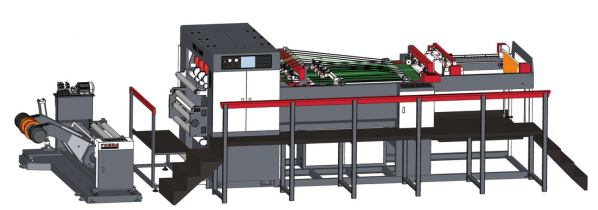
A metalized paper laminating machine at the center of the line: the gantry-type YDLM1300B with servo-controlled tension monitoring, built for high-speed laminating of cigarette, wine and cosmetic packaging board.
What a Metalized Paper Laminating Machine Does - and Where It Stops
The machine's task is narrower than its name suggests. It does not print, emboss or cut. It produces one output: a bonded, dried, dimensionally stable roll. Paper goes in; laminated metalized board comes out. Everything after the rewinding station - cutting, stacking, foil stamping, offset printing - happens on other equipment.
In a transfer configuration, the metallic layer travels on PET or OPP film. The laminator applies adhesive to the paper, presses the film onto the web, cures the adhesive in the drying tunnel, peels the carrier film away and rewinds it separately. In a foil configuration, thin aluminum foil is fed directly into the nip. Both routes depend on the same three variables: adhesive application weight and uniformity, drying energy and profile, and web tension from the unwinding station through to the rewinding station.
The substrate envelope is the first filter. The YDLM1300B accepts paper from 100-350 g/m2, PET film 0.012-0.014 mm, OPP film 0.02-0.06 mm and aluminum film 0.006-0.007 mm. The ZNFH1300-1400-1500 accepts paper from 40-450 g, aluminum foil 0.006-0.01 mm and film 0.01-0.1 mm. If your job sits outside a machine's published envelope, no amount of tuning will make the process repeatable.
Industry Background: Why Metalized Paper Demand Sets the Machine Requirement
The substrate market explains the machine market. In its 2026 metallized paper market report, DataM Intelligence estimated the global metallized paper market at USD 4.85 billion in 2025, driven by tobacco packaging and premium labeling. That concentration matters to equipment buyers: the largest volume segment is also the segment where continuous operation and stable output matter most.
Upstream of the substrate, Future Market Insights estimated the global laminating machines market at USD 676.4 million in 2025 across all laminating types - thermal, wet and dry. That figure is wider than metalized paper converting alone, but it shows the scale of the machinery category that supports it.
Trade documentation adds a practical dimension. Industrial paper laminating machines are commonly referenced under HS Code 8439.30.10 in commercial customs references such as Cybex Exim and Zauba. Classification is not automatic: commercial classification pages list alternative headings depending on machine function and construction, and the importing jurisdiction has the final word. Confirm the code with your customs broker before you calculate landed cost - the answer affects duty, documentation and sometimes financing.
Detailed Solution: Core Components of a Metalized Paper Laminating Machine
Component by component, here is what the machine is actually built from - and what each part controls.
1. Unwinding stations, shafts and no-shaft loading
The unwinding station sets the reference for everything downstream. On the YDLM1300B, the paper unwinding diameter reaches 1500 mm using 3/6/12 inch cores, while the film unwinding diameter is 600 mm. Paper, film and peeled carrier film are handled at separate stations, which is why a single machine can have three unwinding positions.
A no-shaft design - used on the ZNFH1300-1400-1500 - holds the roll through expanding chucks instead of a fixed through-shaft. That machine accepts a sheet roll diameter of 100-1600 mm at the unwinding position and rewinds to 100-1600 mm, with core sizes of 3/6/12 inch for unwinding, 3 inch for foil rewinding and 6/12 inch for rewinding. The practical benefit is that mixed core sizes on incoming rolls do not require shaft changes between jobs.
2. The coating and laminating unit
The YDLM1300B applies water-based adhesive to laminate paperboard using four-roller transfer coating, and applies back coating color through an anilox roller in direct coating mode. The two methods exist for two different jobs: a full-surface adhesive layer needs a transfer roller train that meters and smooths the film of glue, while a back coating color needs a precisely engraved, metered deposit from the anilox roller. A machine described as a laminating and coating integrated machine - which is how both the YDLM1300B and the ZNFH series are classified - carries out both operations in one pass, so the board does not have to be rewound and re-fed.
3. The drying oven and heating tunnel
Drying capacity is the throughput budget of the whole line. The YDLM1300B runs a heating tunnel at up to 130 degrees C with a tunnel length of 15 m and a lower tunnel section of 8.6 m. The ZNFH1300-1400-1500 uses a drying path of 12.5 m. A drying section that is too short for the adhesive and the line speed leaves residual moisture or solvent, which shows up as blocking in the rewind or inconsistent surface finish. A tunnel that runs too hot for the film distorts the carrier film and curls the board.
This is where patented design becomes a purchasing question rather than a technical footnote. YUEDA holds an appearance design patent for the drying oven, ZL 2014 3 0219033.6, and a utility model, ZL 2022 2 1114210.X, covering an energy-saving double-layer drying oven. The two patents protect different things: one is about the form and appearance of the oven structure, the other about a functional improvement. Both relate to the component that consumes the largest share of the machine's installed power - the ZNFH series draws 121 kW or 129 kW depending on model, against 60 kW of motor power and 216 kW of heating power on the YDLM1300B, where working power is 80 kW.
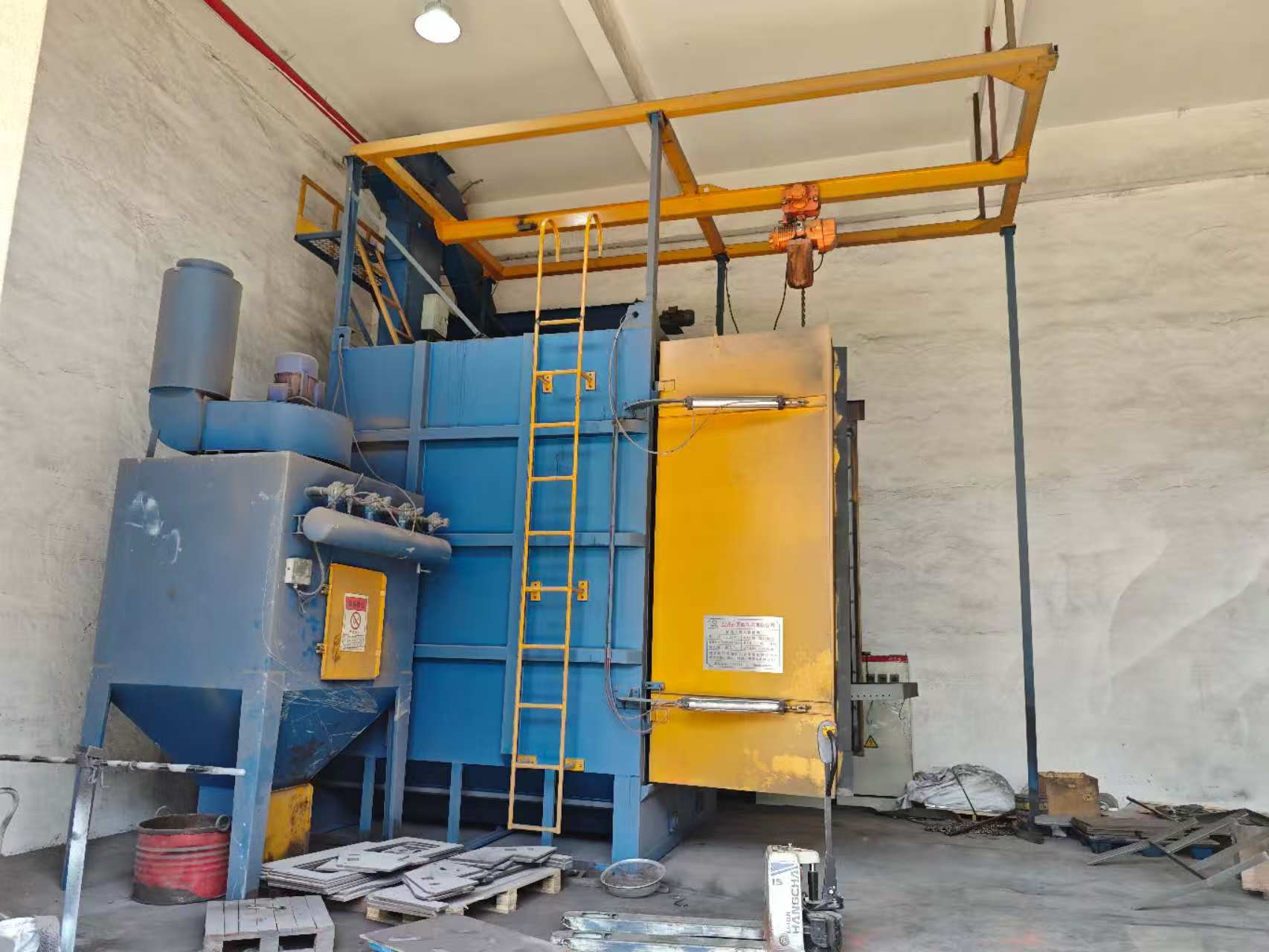
The coating and drying section: a large industrial coating and drying system supporting high-speed continuous laminating production.
4. Rewinding, peeling and roll handling
On the YDLM1300B, paper rewinds to a diameter of 1600 mm on 3/6 inch cores, and the film unwinding and peeling-off rewinding diameters are each 600 mm on 3/6 inch cores. Rewind diameter is not a cosmetic number. It determines how long the machine can run before an operator has to stop and change a roll, so a larger rewind diameter translates directly into longer uninterrupted production between roll changes.
The peeling station is what makes transfer lamination possible. After drying, the carrier film is separated from the metalized surface and rewound on its own station, so the finished paper leaves the machine clean and ready for printing.
5. Drive, tension and electrical control
The YDLM1300B is rated for 380 V plus or minus 10 percent at 50 Hz, with 60 kW of motor power, 216 kW of heating power and 80 kW of working power. Tension control is the component that determines whether all that mechanical and thermal capacity turns into consistent output. Servo-controlled configurations with real-time tension monitoring are part of the YUEDA lineup, supported by an intelligent electrical control cabinet with touch-screen operation and real-time production parameter monitoring.
When tension drifts, the symptoms are familiar to any converter: registration error, wrinkles, curl and edge misalignment. Those defects do not disappear at the cutting stage - they are simply cut into the blank and discovered later during printing or box forming.
6. Frame, material and service life
The machines covered here are carbon steel structures. Size indicates the scale of the frame: the YDLM1300B has overall dimensions of 22,330 x 3,700 x 4,500 mm and a net weight of 40 tons. The ZNFH series measures 21 m in length with widths of 2.9 m, 3.1 m or 3.2 m and a height of 3.2 m, depending on the roller face width of 1300 mm, 1400 mm or 1500 mm. Structural mass and rigidity are directly related to vibration behavior at rated speed - which is why the frame is a specification item, not a detail.

Where the components come from: a modern manufacturing workshop equipped with complete processing and assembly lines for packaging machinery.
YDLM1300B Gantry Style vs ZNFH No-Shaft Rewinding: Two Ways to Build the Same Job
The YDLM1300B is a gantry-type laminating and coating integrated machine. Its structure spans the line from above, and it combines the coating unit and the laminating unit in one frame. Working width runs from 600 to 1200 mm, machine speed reaches 180 m/min, and working speed is 15-150 m/min. It is a water-base laminate paperboard machine, and its paper range of 100-350 g/m2 fits folding carton board for cigarette, wine, cosmetic and tea packaging.
The ZNFH1300-1400-1500 takes the other construction route. It is an aluminum metalized paper laminating and coating integrated machine with no-shaft rewinding, offered in three roll face widths so a converter can match the machine to a fixed board width. Running speed is 5-150 m/min, the substrate range is wider at 40-450 g of paper, and the double-direction unwinding and rewinding window of 100-1600 mm makes it suitable for longer rolls and heavier handling.
The selection question is not which machine is better. It is which construction matches your substrate range, your width, your target speed and the way your operators load and unload rolls. A wider substrate envelope and a wider rewind window answer different production problems than a shorter drying tunnel and a more compact footprint.
How the Laminator Connects to Sheet Cutters: Step by Step
A laminating machine produces rolls. A packaging buyer buys blanks. The link between the two is the sheet cutter, and the sequence below is the one most lines follow.
- Substrate confirmation and roll loading. Paper grammage and film or foil thickness are checked against the machine's published envelope before loading. On a no-shaft machine, the roll is mounted on expanding chucks rather than threaded onto a shaft.
- Adhesive application. The coating unit meters water-based adhesive onto the paper. On the YDLM1300B this is done by four-roller transfer coating.
- Lamination nip. Film or foil is pressed onto the adhesive-coated web. Registration at this point determines how the metallic surface sits relative to the printed design later.
- Drying. The web passes through the heating tunnel. Tunnel length, temperature and line speed together determine whether the adhesive is fully cured.
- Cooling and peeling. In transfer mode, the carrier film is stripped off and rewound on a dedicated station.
- Rewinding. The laminated board is wound into a finished roll - up to 1600 mm on the YDLM1300B.
- Handoff to the sheet cutter. The roll is transferred to the cutting line, where unwinding, tension and cut length are set for the target blank.
- Cutting, stacking and waste edge trimming. Blanks are cut to length, stacked and squared. The associated trimming system removes waste edges before the stack is palletized.
The sheet cutters that typically follow the laminator
YUEDA builds three cutter families for this handoff. The YD1300-1400 is a shaft-less high-precision positioning sheeter with a sheeting accuracy of plus or minus 0.1 mm, a sheeting length range of 400-1200 mm, sheet roll widths of 700-1200 mm or 700-1300 mm, a maximum sheet roll diameter of 1600 mm, stacking height of 1300 mm, running speeds of 95 m/min or 90 m/min, a mechanical sheeting speed of 140 sheets/min and power consumption of 17.5 kW or 20 kW.
The YDSLX1300-1400 is a high-precision double rotary sheet cutter using an up-and-down double cyclotron screw knife. Blank cutting accuracy is plus or minus 0.1 mm, operating speed reaches up to 300 m/min, cutting speed is 10-400 sheets per minute, unwinding diameter is up to 1650 mm, material width is 400-1400 mm or 400-1250 mm, maximum cutter load is 550 gsm and total power is 73 kW.
The DWLX1300L-1400L is the positioning version of the double rotary cutter. It holds plus or minus 0.1 mm blank cutting accuracy and plus or minus 0.1 mm longitudinal and transverse tracking accuracy, works up to 300 m/min, cuts 10-400 sheets per minute, and accepts cut lengths from 450 mm to 1400 mm with a cutter load up to 550 gsm. Machine weights are 17,000 kg and 15,800 kg respectively.
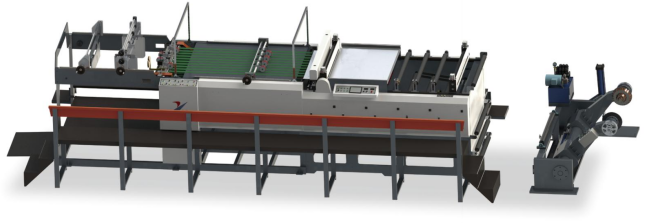
The cutting handoff: an automatic positioning cross-cutting machine, suitable for high-precision cutting of a range of packaging materials.
Why Patents Matter When You Buy a Laminating Machine
Two patent types appear on this kind of equipment, and they protect different things. An appearance design patent covers the form and appearance of a product or component - for example, the drying oven appearance design patent ZL 2014 3 0219033.6. A utility model covers a functional or structural improvement - for example, the utility model ZL 2022 2 1114210.X relating to an energy-saving double-layer drying oven. Both are Chinese patent documents, and both relate to individual components rather than to the machine as a whole.
For a buyer, patents are useful for three reasons. First, they are checkable: a patent has a number, an owner and a status, so a claim can be verified rather than believed. Second, they indicate where a manufacturer invested engineering effort - in this case, in the drying oven, which is also the most power-hungry part of the line. Third, they travel with the equipment documentation, which matters when machines are financed, resold or imported into markets where intellectual property disputes can delay clearance.
A short verification routine: match the patent number to the certificate copy; confirm the patent holder name matches the manufacturer you are contracting with; distinguish utility models from appearance design patents and note the remaining term; confirm that the feature you are relying on commercially is the feature actually claimed; and file copies with the purchase agreement and shipping documents.
Use Cases: Where These Configurations Are Specified in Operation
Southeast Asian installations show how the specification changes with the environment. In Thailand, a cosmetic gift box project runs on a dust-free workshop setup with dust-proof design, high-precision calibration and anti-static requirements, automatic operation with photoelectric positioning, and supporting equipment including a feeder, stacker and waste edge trimming system. In Vietnam, high-speed laminating and coating for cigarette packaging is specified for 24/7 continuous operation with automatic PLC control, humidity-resistant and dust-proof measures and a constant temperature environment.
The downstream applications are consistent across the lineup: printed wine boxes, cigarette paper packaging, cosmetics paper packaging, tea paper packaging, disposable waterproof paper tableware, cake paper packaging and chewing gum paper packaging. The pattern is the same in each case - a reflective board surface that must survive printing, die-cutting and folding without losing registration or surface quality.
YDLM1300B vs ZNFH1300-1400-1500: Specification Comparison
| Specification | YDLM1300B (Gantry Type) | ZNFH1300-1400-1500 (No-Shaft Rewinding) |
|---|---|---|
| Machine type | Gantry-type laminating and coating integrated machine | Aluminum metalized paper laminating and coating integrated machine |
| Working / roller face width | 600-1200 mm | 1300 mm / 1400 mm / 1500 mm roller face |
| Sheet roll width | Within working width of 600-1200 mm | 600-1200 mm, 700-1300 mm or 700-1400 mm |
| Machine speed | 180 m/min | Not separately published |
| Working / running speed | 15-150 m/min | 5-150 m/min |
| Suitable paper | 100-350 g/m2 | 40-450 g |
| Film / foil thickness | PET 0.012-0.014 mm; OPP 0.02-0.06 mm; aluminum film 0.006-0.007 mm | Aluminum foil 0.006-0.01 mm; film 0.01-0.1 mm |
| Adhesive application | Four-roller transfer coating (water-base laminate paperboard) | Integrated laminating and coating |
| Back coating | Anilox roller direct coating | Integrated laminating and coating |
| Drying | Heating tunnel up to 130 degrees C, tunnel length 15 m, lower section 8.6 m | Drying path 12.5 m |
| Unwinding diameter | Paper 1500 mm; film 600 mm | 100-1600 mm at unwinding position; foil roll 600 mm |
| Rewinding diameter | Paper 1600 mm; film and peeling-off 600 mm | 100-1600 mm |
| Core sizes | 3/6/12 inch (paper unwinding); 3/6 inch (rewinding) | 3/6/12 inch unwinding; 3 inch foil rewinding; 6/12 inch rewinding |
| Power | 380 V plus or minus 10 percent, 50 Hz; 60 kW motors; 216 kW heating; 80 kW working power | 121 kW or 129 kW total power consumption |
| Dimensions | 22,330 x 3,700 x 4,500 mm | 21 m x 2.9 m / 3.1 m / 3.2 m x 3.2 m |
| Weight | 40 t | Not listed in the published specification |
| Material of construction | Carbon steel | Carbon steel |
Frequently Asked Questions
What patents and documents should I verify on a metalized paper laminating machine?
Verify the component-level patents a supplier cites, and match each number to its certificate. On the YUEDA line, the documented patent evidence is the drying oven appearance design patent ZL 2014 3 0219033.6 and the utility model ZL 2022 2 1114210.X for an energy-saving double-layer drying oven. Trade documentation is a separate question: industrial paper laminating machines are commonly referenced under HS Code 8439.30.10, but commercial sources list alternative headings depending on machine function, and only the importing jurisdiction can confirm the final code. Any conformity or certification claim should be supported by a certificate showing a number and an issuing body rather than a logo alone.
Can one machine handle both laminating and back coating?
Yes, when the machine is built as a laminating and coating integrated unit. The YDLM1300B applies water-based adhesive to laminate paperboard through four-roller transfer coating, and applies back coating color through an anilox roller in direct coating mode, in the same pass. The ZNFH1300-1400-1500 is also classified as an aluminum metalized paper laminating and coating integrated machine. Integrated operation avoids rewinding and re-feeding the board between the two operations.
What drives the cost of a metalized paper laminating machine?
No price list is published for this category, so cost has to be built from configuration. The main drivers visible in the specifications are roller face and working width, rated versus working speed, drying section length (15 m of heating tunnel on the YDLM1300B against a 12.5 m drying path on the ZNFH series), installed power (60 kW motors and 216 kW heating on the YDLM1300B, or 121/129 kW total on the ZNFH models), the number of unwinding and rewinding stations, shaft versus no-shaft roll handling, and whether sheet cutters are quoted together with the laminator. Request an itemized quotation against your own substrate and width.
How can I validate laminating and cutting quality before ordering?
Define the test set first: paper grammage, film or foil thickness, target working speed and the cut tolerance the finished blank requires. The YDLM1300B accepts paper from 100-350 g/m2 and the ZNFH series from 40-450 g, so the test material should sit inside the envelope of the machine you are evaluating. On the cutting side, the reference to hold is the plus or minus 0.1 mm blank cutting accuracy published for the YD1300-1400, YDSLX1300-1400 and DWLX1300L-1400L cutters. Run the trial on your own material and keep the trial report with the quotation.
How should I plan floor space, power and delivery schedule?
Space and power can be planned from published data. The YDLM1300B occupies 22,330 x 3,700 x 4,500 mm and weighs 40 t, while the ZNFH series is 21 m long with a 3.2 m height and width of 2.9 to 3.2 m. Both run on 380 V at 50 Hz; the YDLM1300B draws 80 kW working power, and the ZNFH models 121 kW or 129 kW total. Allow separate power and floor space for the cutter, which can be 9.6 m or 13.85 m long depending on model. For lead time, request a dated schedule in writing, since no standard figure is published for this equipment class. For a configuration review, a trial or a quotation, contact YUEDA directly using the details at the end of this guide.
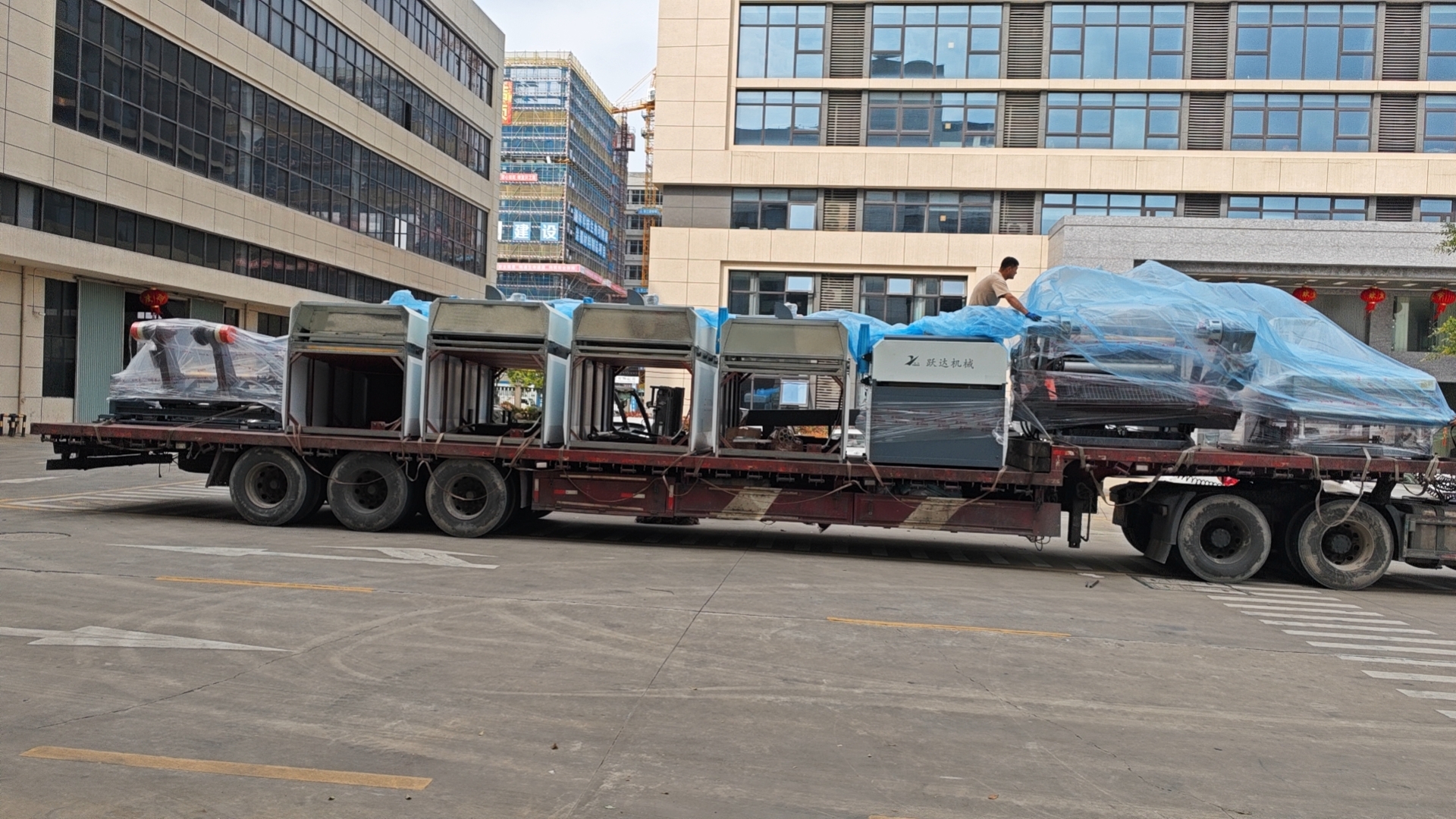
From order to installation: on-time delivery with professional loading, prepared for long-distance transport to overseas packaging plants.
Conclusion: Specify the Component, Not the Category
A metalized paper laminating machine is a chain of components, and each link carries a number you can check: unwinding diameter and core size, coating method, drying length and temperature, rewind diameter, installed power, frame mass. The patents attached to the drying oven on the YUEDA line - ZL 2014 3 0219033.6 and ZL 2022 2 1114210.X - are simply the most formal version of the same principle: claims that can be verified are worth more than claims that cannot. Once the laminator is specified correctly, the sheet cutter decides whether that roll becomes a usable blank, which is why the plus or minus 0.1 mm accuracy shared across the cutter range matters as much as the laminating speed.
Next Step: Request the Specification Pack
Wenzhou Yueda Packaging Machinery Co., Ltd. (YUEDA) publishes a full catalogue covering the YDLM1300B gantry-type laminating and coating machine, the ZNFH1300-1400-1500 no-shaft rewinding system and the sheet cutters described in this guide. Download it here: YUEDA packaging machinery catalogue (PDF).
For a configuration review, a sample, a quotation or distributor enquiries, contact Jack: email 2179069246@qq.com, telephone and WhatsApp +86 19857780001, website www.yuedamachine.com. Address: Yueda Machinery, Building 2, No. 1333 Times Avenue, Longgang City, Wenzhou City, Zhejiang Province, China.
Have Questions or Need More Details?
Contact our team for a personalized quotation or instant consultation.
Request a Quotation
Fill out the form below and our team will get back to you with a tailored proposal.
WhatsApp Direct Chat
Prefer to chat in real-time? Message us on WhatsApp for instant assistance & quick answers.
- Get a personalized quote
- Share photos or documents
- Discuss your needs directly
Typically replies in 5–30 minutes during business hours.