Verifying Patents and Acceptance Terms for Metalized Paper Laminating Machines
A metalized paper laminating machine is not selected by comparing catalogue adjectives. It is selected by tracing every capability claim back to a numbered document, and every document forward to a test that can be repeated. This guide gives procurement teams a practical supplier evaluation method: audit the patent and copyright record — including the Positioning Sheeter (Shaft-less) utility model ZL 2025 2 0755442.0, the metallized paper laminating machine utility model ZL 2020 2 0570919.5, and the Automatic Paper and Plastic Conveying System software copyright 2020SR0669497 — and then convert those documents into acceptance criteria and commercial terms written into the purchase order.
Problem Definition: Where Supplier Evaluation Normally Breaks Down
Most supplier evaluations for industrial laminating equipment are conducted against sales language rather than documents. Two suppliers can describe the same machine as “high precision” or “energy saving,” but only one can produce a registration number, a defined claim scope and a factory test that a third party can repeat. When the purchase order is signed on adjectives, the buyer carries the technical risk and the supplier carries none.
Three failure modes account for most of the gap between what a buyer believes they purchased and what arrives on the loading dock.
Failure mode 1: the claim has no reference number
“Patented technology,” “proprietary control system,” “unique structure” — statements of this type are unverifiable by definition until a registration number is attached. A buyer who accepts them has no way to check ownership, validity or scope, and no way to distinguish a registered utility model from a marketing phrase.
Failure mode 2: the document exists but does not cover the quoted machine
This is the more expensive error. A supplier can hold a genuine certificate that protects one module — a conveying system, for example — while the machine actually quoted uses a different configuration. The document is real; the link between the document and the deliverable is not.
Failure mode 3: the document exists, but nothing enforces it
Even a correct, relevant patent does not guarantee that the delivered unit performs. Unless the technical content of the document is translated into a measurable acceptance line - running speed, tension stability, cut position accuracy, thermal protection - the paperwork never becomes a delivery obligation.
This article addresses all three failure modes in sequence: what to request, how to audit it, and how to write it into acceptance terms.
Industry Background: Why the Paper Trail Now Carries Procurement Weight
Metalized paper laminating sits at the intersection of two demand curves. The metallized paper substrate market reached USD 4.85 billion in 2025, driven by tobacco packaging and premium labeling (DataM Intelligence, Metallized Paper Market Growth Insights 2033). The laminating machinery market that processes that substrate was estimated at USD 676.4 million in 2025 (Future Market Insights, Laminating Machines Market Global Analysis Report). Demand of this scale is concentrated in applications where surface appearance, registration and repeatability are the product — not optional features.
Three practical consequences follow for buyers evaluating a metalized paper laminating machine in 2026:
- Premium packaging sets the quality floor. Because tobacco, wine and cosmetic packaging is judged visually, buyers must verify registration and tension control rather than assume them.
- Trade classification must be handled deliberately. Industrial paper laminating machines are primarily classified under HS Code 8439.30.10 for international trade. The classification should be confirmed against the importing jurisdiction and the machine’s actual function before the shipment is booked, not after.
- Documentation has become a screening filter. When several suppliers present comparable specifications and comparable pricing, the differentiator is whether technical claims are traceable, and whether acceptance terms are already defined.
The Document Set That Anchors a Metalized Paper Laminating Machine File
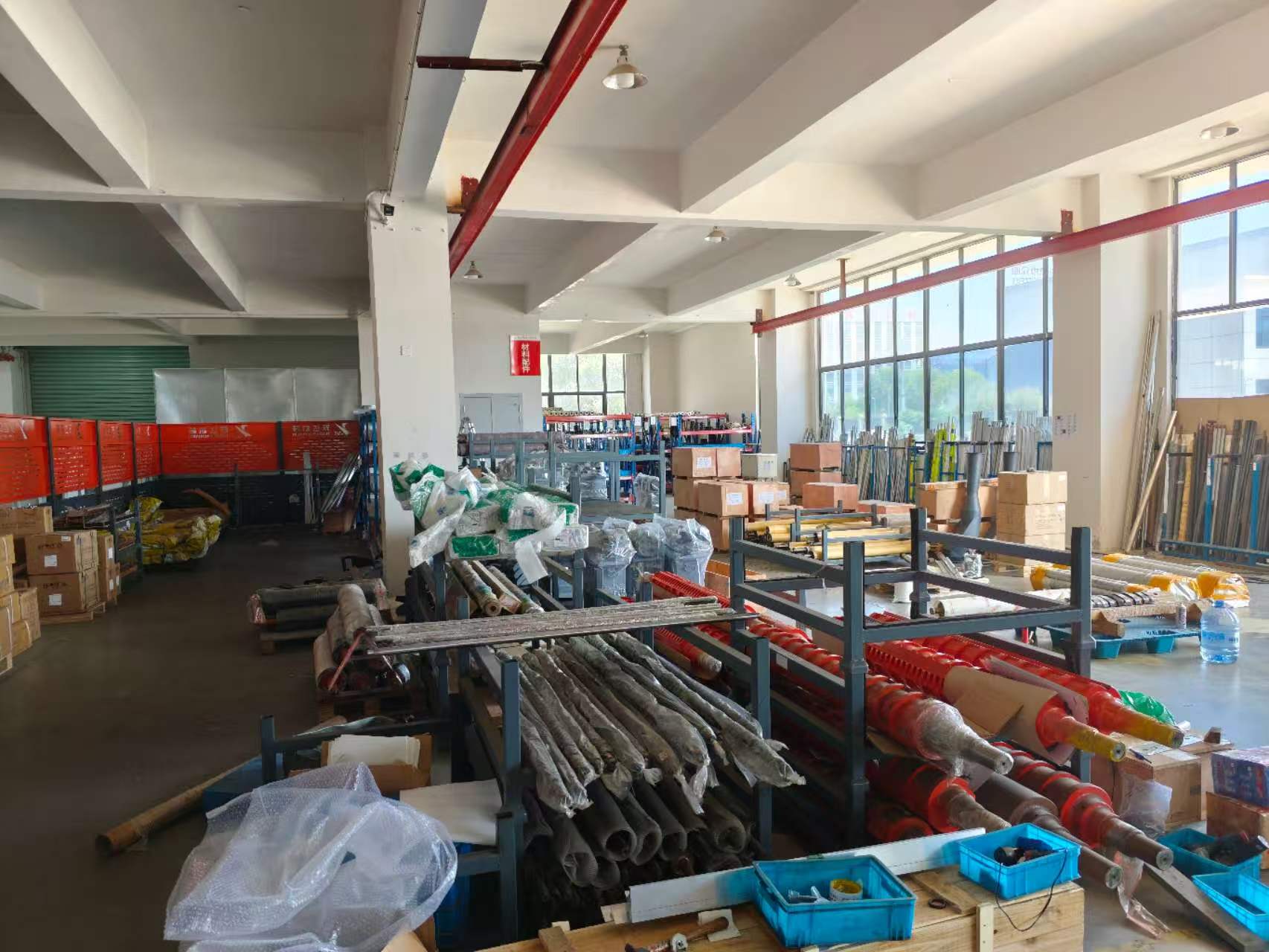
Wenzhou Yueda Packaging Machinery Co., Ltd. (YUEDA) is a manufacturer of gold and silver cardboard laminating, coating and cutting equipment based in Longgang, Wenzhou, China, a region known as China’s printing city. The company reports a founding year of 1998 and exports to Southeast Asia, the Middle East, South America and Africa. For a buyer, the more useful part of the supplier file is the registered intellectual property record, which can be checked against public registries rather than accepted as a statement.
Four registered assets form the verifiable core of a YUEDA metalized paper laminating machine quotation.
1. Positioning Sheeter (Shaft-less) — utility model ZL 2025 2 0755442.0
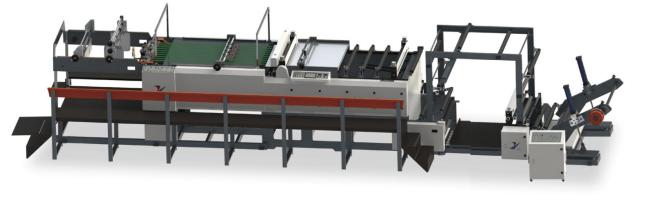
This registration covers the shaft-less positioning sheeter function, the module that determines how accurately a web is registered and cut to length. For a packaging converter, this is the document behind cut-to-print registration claims, and it should be requested whenever the quotation includes a sheeting or cross-cutting stage.
2. Metallized paper laminating machine — utility model ZL 2020 2 0570919.5
This registration covers the metallized paper laminating machine itself. It is the primary document to match against the model being quoted, because it defines the machine class the supplier has registered rather than a peripheral accessory.
3. Automatic Paper and Plastic Conveying System — software copyright 2020SR0669497
Registered software copyright is the machine-readable counterpart of a patent. 2020SR0669497 covers the Automatic Paper and Plastic Conveying System, the control and conveying logic that governs how substrate is advanced through the line. Buyers who are evaluating a servo control metalized paper laminating machine should ask for this registration specifically, because control architecture is otherwise invisible in a specification sheet.
4. Energy-saving double-layer drying oven — patent ZL 2022 2 1114210.X
Model-specific efficiency claims need their own document. The YUEDA YDLM1300B gantry multifunctional laminating machine incorporates an energy-saving double-layer drying oven covered by patent ZL 2022 2 1114210.X. This is an example of the correct form of an efficiency claim: a named model, a named subsystem and a registration number that can be checked.
Step-by-Step Breakdown: How to Audit the Documentation
The audit below can be completed before any deposit is paid, and most of it before a factory visit. It is designed so that each step produces a document the buyer keeps, not a verbal answer.
- Build the document request list from the quotation, not from the brochure. Read the technical offer first and list every module named in it — sheeting, laminating, conveying, drying, rewinding. Then request, for each module, the registration or copyright number that applies. Ask for the certificate copy, the holder name, the registration number and the registration date.
- Match each number to a module, not to the company. A supplier can hold a large portfolio that has nothing to do with the quoted configuration. Write one line per module: module name, registration number, and the specific claim the supplier says the document supports.
- Confirm that the holder matches the contracting entity. The party named on the certificate must be the party that signs the sales contract, or the relationship must be documented in writing. A mismatch between certificate holder and seller is a legal and supply-continuity question, not a formality.
- Read the scope, and record what the document does not cover. Utility models, invention patents and software copyrights protect different things. A utility model protection for a sheeter does not automatically extend to the laminating unit, and a software copyright does not extend to mechanical accuracy. Naming the limits protects both sides later.
- Request a document-to-configuration map inside the technical offer. For each registered asset, the supplier should state which assembly, function or control module it applies to in the quoted machine. If that map cannot be produced, the buyer should treat the patent claim as unverified for this procurement.
- Convert each document into at least one acceptance line. Every registered function should generate a measurable test at the factory. If the supplier claims a positioning sheeter registration, the shipment should carry a cut-position accuracy test. If the supplier claims a closed-loop control registration, the shipment should carry a tension stability test.
- Verify physically or by recorded video. Pre-shipment verification is where documents become evidence. Ask for the unit to be run on the buyer’s own substrate or an equivalent, and require that the run be recorded if the buyer cannot attend.

Acceptance Terms: Turning Documents Into Testable Criteria
Acceptance criteria are the commercial translation of the technical file. Each item below corresponds to a documented control function, so a buyer can write it into the purchase order and test it before shipment rather than argue about it after installation.
| Acceptance item | Documented control | How it is verified |
|---|---|---|
| Cutting position accuracy | Photoelectric correction with dual photoelectric eyes (main and backup) for real-time position calibration | Cut-position test on the buyer’s material during pre-shipment run |
| Web tension stability | Closed-loop servo control with real-time tension monitoring and adjustment at 0.1 N precision | Tension log and material inspection at the factory test |
| Thermal safety | Temperature sensors on key components (motor and heating roller) with automatic shutdown | Demonstration of the shutdown function and sensor readout |
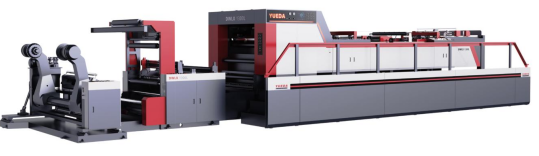
| Running speed and width | Gantry multifunctional configuration, YDLM1300B rated at 180 m/min with working width 600–1200 mm | Continuous run at rated speed on the agreed substrate |
| Energy performance | Energy-saving double-layer drying oven, patent ZL 2022 2 1114210.X | Verification against the model-level configuration list |
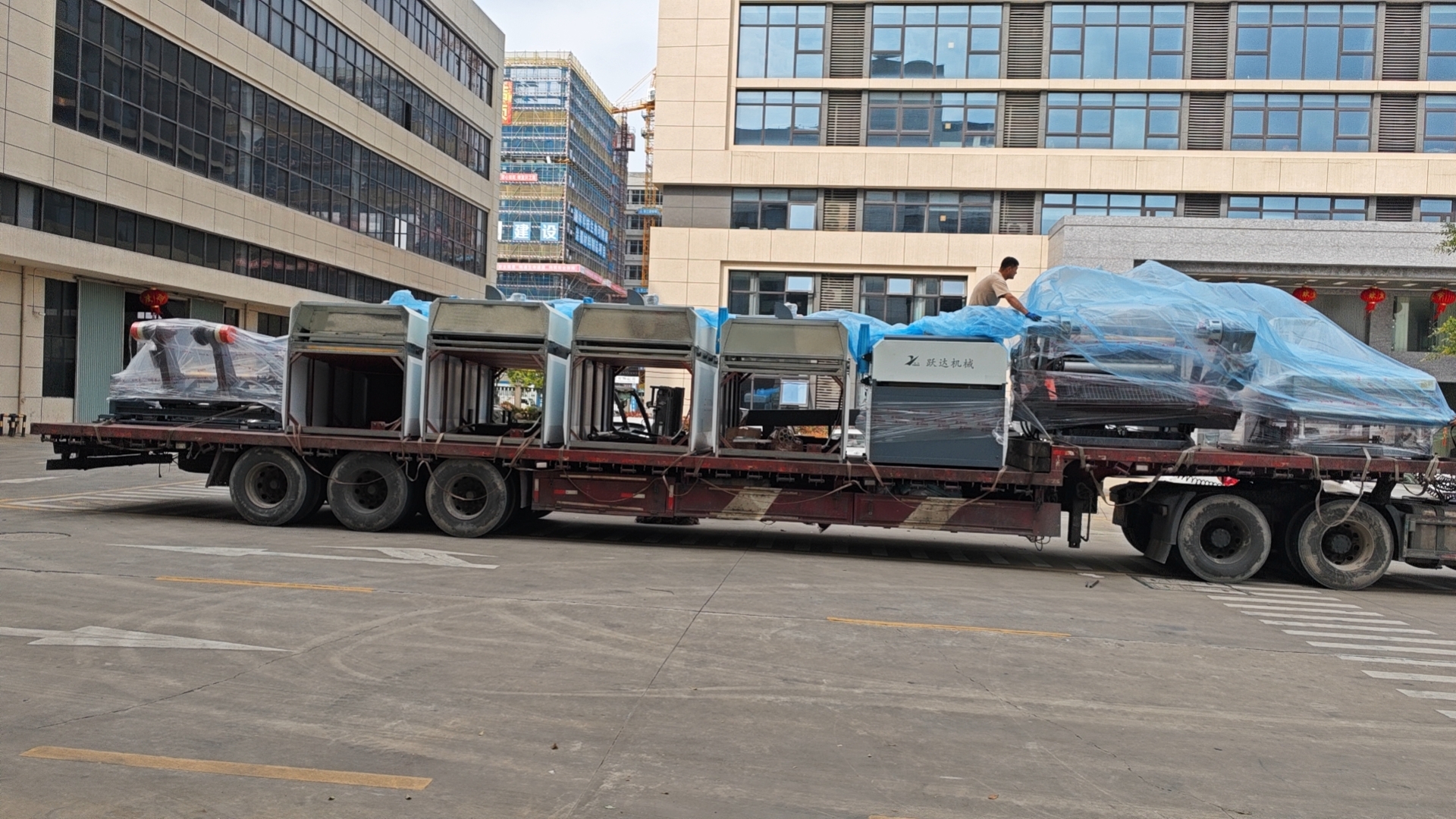
Buyers should also fix the testing protocol itself, because the credibility of every line above depends on it. YUEDA performs 100% testing on all units, and pre-shipment testing includes a 2-hour continuous run; third-party inspection is available on request. For high-value orders, a buyer can appoint an inspection body to witness the run and confirm that the acceptance lines were tested on the specified material.
Commercial Terms to Fix in Writing
Purchase terms belong in the same document as the technical acceptance criteria, so that commercial exposure and technical exposure are reviewed together.
| Term | Agreed condition |
|---|---|
| Minimum order quantity | 1 unit |
| Delivery terms | FOB Ningbo / CIF major overseas ports |
| Payment terms | 30% T/T deposit, 70% balance before shipment; L/C at sight for orders over USD 100,000 |
| Acceptance criteria | Pre-shipment test at the factory; third-party inspection available |
| Lead time | 30–45 days for standard products |
| Production capacity | 12–15 units per month |
| After-sales response | 24-hour online response, 48-hour domestic on-site service, 72-hour overseas remote debugging, plus remote technical support |
Capacity and lead time are worth reading together. A monthly capacity of 12 to 15 units defines how many orders can move through the line concurrently, which is the number that determines whether a quoted 30–45 day lead time is realistic for the buyer’s project window.
Use Cases: How Three Buyer Profiles Apply the Same Method
Importer or distributor qualifying a new supplier
A distributor adding a new metalized paper laminating machine supplier needs documentation that can be shown to their own customers. The practical output of the audit is a one-page supplier file: registration numbers for the laminating machine and the positioning sheeter, the software copyright for the conveying system, the model-level specification of the quoted unit, and the written acceptance and payment terms. This file also protects the distributor if a downstream client questions the origin of the technology.
Packaging converter adding premium capacity
A converter serving tobacco, wine or cosmetic packaging is buying registration quality, not tonnage. Here the acceptance criteria carry the evaluation. Cut-position accuracy, tension stability at 0.1 N precision and thermal protection should be tested on the converter’s own metallized substrate before shipment, and the test results attached to the purchase order as the agreed baseline for commissioning.
Buyer replacing an existing line on a fixed schedule
When installation must fit a fixed production window, document verification front-loads the risk. Confirming the document-to-configuration map and the energy-saving oven configuration before deposit avoids configuration changes mid-build, and the 30–45 day standard lead time can be validated against current capacity of 12–15 units per month rather than assumed.
Comparison Table: What Makes a Supplier Statement Verifiable
The table below is the audit instrument in condensed form. It compares four common statements against the evidence that would make each one a purchasing fact.
| Statement | What makes it verifiable | Document or record to request |
|---|---|---|
| “The machine is patented” | A registration number, a holder name and a defined claim scope | Utility model ZL 2020 2 0570919.5 for the metallized paper laminating machine; ZL 2025 2 0755442.0 for the Positioning Sheeter (Shaft-less) |
| “Our control system is proprietary” | A software registration that can be matched to the supplied control architecture | Automatic Paper and Plastic Conveying System software copyright 2020SR0669497 |
| “Energy consumption is optimized” | A named subsystem on a named model, tied to a registration | Energy-saving double-layer drying oven, patent ZL 2022 2 1114210.X, applied in the YDLM1300B configuration |
| “Accuracy and reliability are guaranteed” | A defined control method plus a factory test on the buyer’s material | Dual photoelectric eyes with real-time calibration; closed-loop servo tension control at 0.1 N; 100% testing with a 2-hour continuous pre-shipment run |
| “Delivery is fast and dependable” | A contracted lead time supported by stated monthly capacity | 30–45 day standard lead time against 12–15 units per month production capacity |
Reference Configuration: YUEDA YDLM1300B at a Glance
The YDLM1300B is YUEDA’s gantry multifunctional laminating machine, positioned for cigarette and wine packaging production. Its published specification illustrates how a verifiable configuration should read: a rated speed of 180 m/min, a working width of 600–1200 mm, and an energy-saving double-layer drying oven covered by patent ZL 2022 2 1114210.X. Each of these three statements can be checked against a document, which is the standard buyers should apply to every supplier in the comparison set.
FAQ
Which patent and copyright documents should I request before signing a metalized paper laminating machine contract?
Request three categories. First, machinery utility models that cover the functions named in the technical offer — for example the metallized paper laminating machine utility model ZL 2020 2 0570919.5 and the Positioning Sheeter (Shaft-less) utility model ZL 2025 2 0755442.0. Second, the software registration for the control system, such as the Automatic Paper and Plastic Conveying System software copyright 2020SR0669497. Third, any model-specific technology registration, such as the energy-saving double-layer drying oven patent ZL 2022 2 1114210.X. For each document, obtain the certificate copy, the registration number, the holder name and the registration date, and confirm that the holder is the entity signing the sales contract.
How do I confirm that a patent number actually covers the machine I am quoted?
A registration number alone is not sufficient. Match the document to a module: the sheeter registration should apply to the sheeting or positioning function in the offer, and the laminating registration to the laminating unit. Then ask the supplier for a document-to-configuration map that names the assembly, function or control module each registration applies to in the quoted model. Finally, record what the document does not cover — a utility model for one module is not evidence of performance for another. If the map cannot be provided, treat the claim as unverified for that procurement.
What acceptance criteria should be written into the purchase order?
Write one testable line per documented control function. Cutting position accuracy should be tested against the photoelectric correction system that uses dual photoelectric eyes for real-time position calibration. Web tension should be verified against the closed-loop servo control that monitors and adjusts tension at 0.1 N precision. Thermal safety should be demonstrated through the temperature sensors fitted to the motor and heating roller with automatic shutdown. Speed and width should be tested at the rated YDLM1300B figures of 180 m/min and 600–1200 mm. The protocol should specify that 100% testing is performed on all units, that the pre-shipment test includes a 2-hour continuous run, and that third-party inspection is available.
What commercial terms are typical for a metalized paper laminating machine order?
Standard terms used for this equipment category are a minimum order quantity of 1 unit, delivery on FOB Ningbo or CIF major overseas ports, and payment of 30% T/T deposit with 70% balance before shipment, with L/C at sight available for orders over USD 100,000. Acceptance is handled as a pre-shipment test at the factory, with third-party inspection available. Buyers should place these terms in the same document as the technical acceptance criteria, so that commercial and technical exposure are reviewed together rather than separately.
What lead time and after-sales support should a buyer expect?
For standard products, the typical lead time is 30–45 days, supported by a production capacity of 12–15 units per month. After-sales service is delivered through remote technical support with a 24-hour online response, 48-hour domestic on-site service and 72-hour overseas remote debugging. Buyers comparing suppliers should check that quoted lead time is consistent with stated monthly capacity, because that relationship is usually the first place a schedule commitment becomes unrealistic. To move from evaluation to a concrete offer, you can request a quotation or an inspection visit and download the full product brochure below.
Conclusion: Buy the Documented Machine
Supplier evaluation for a metalized paper laminating machine is a documentation exercise before it is a commercial one. A buyer who collects the registrations — ZL 2025 2 0755442.0 for the Positioning Sheeter (Shaft-less), ZL 2020 2 0570919.5 for the metallized paper laminating machine, 2020SR0669497 for the Automatic Paper and Plastic Conveying System, and ZL 2022 2 1114210.X for the energy-saving double-layer drying oven — and then writes those functions into measurable acceptance lines, has converted marketing language into a delivery obligation.
The same discipline applies to commercial terms. Minimum order quantity, delivery terms, payment structure, lead time and after-sales response are all verifiable, contractable items. When they are fixed alongside the technical criteria, delivery assurance stops being a promise and becomes an enforceable baseline for commissioning and long-term supply.
Next Step: Request the Document Set With Your Quotation
Ask for the patent and software copyright documentation, the document-to-configuration map, and the acceptance terms together with your price quotation for the YUEDA metalized paper laminating machine range. Technical and commercial terms can be reviewed in a single package before deposit.
Website: www.yuedamachine.com | Blog: blog.yuedamachine.com
Product brochure (public download): Download the YUEDA machinery brochure
Contact: Jack | Email: 2179069246@qq.com | Tel / WhatsApp: +86 19857780001
Address: Yueda Machinery, Building 2, No. 1333 Times Avenue, Longgang City, Wenzhou City, Zhejiang Province, China
Have Questions or Need More Details?
Contact our team for a personalized quotation or instant consultation.
Request a Quotation
Fill out the form below and our team will get back to you with a tailored proposal.
WhatsApp Direct Chat
Prefer to chat in real-time? Message us on WhatsApp for instant assistance & quick answers.
- Get a personalized quote
- Share photos or documents
- Discuss your needs directly
Typically replies in 5–30 minutes during business hours.