Solving Metalized Paper Laminating Machine Downtime: Shaft-less Rewinding for Continuous Production
Downtime in a metalized paper laminating line rarely comes from one dramatic failure. It accumulates at roll changes: the shaft is withdrawn, a new roll is positioned, the core is aligned, tension is re-established, and the line waits for stable web handling before good production resumes. In a coating-integrated laminating process, every minute lost at the unwind or rewind end also disturbs drying, coating weight, and downstream sheeting.
YUEDA's Automatic Aluminum metallized Cardborad Lamintaing &Coating Machine No Shaft Type Rewinding (ZNFH1300-1400-1500) is designed for this operating point. It combines a no-shaft rewinding configuration with a 600–1200 mm working width, a 5–150 m/min running speed range, and a 12.5 m drying path. This article explains where the downtime occurs, what the ZNFH changes, and how to evaluate the machine for a specific packaging project.
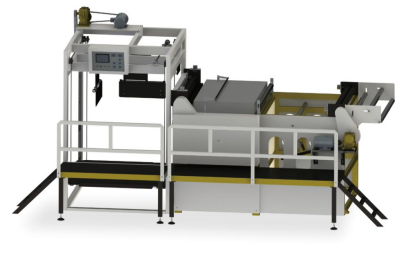
Cover: Fully automatic metalized cardboard laminating production line configured for continuous industrial production. Image source: YUEDA.
Problem Definition: Where a Laminating Line Loses Time
The main downtime loss in a shaft-based laminating workflow is not the laminating speed itself. It is the manual handling cycle around the roll. Operators must remove a shaft, lift or position a heavy roll, insert the shaft again, align the core, lock the roll, and re-establish tension. Each step creates a window in which the line is not producing saleable metalized paper.
Those windows become more expensive when the line is configured for 24/7 operation. A cigarette packaging line may run in 60–70% humidity, while a cosmetic packaging line may require a dust-free workshop at 30–35°C. In both cases, the process depends on stable unwinding, coating, drying, and rewinding. A roll change that disturbs tension can create web breaks, coating variation, or rework that lasts longer than the manual handling step itself.
- Manual shaft handling: loading and unloading a through-shaft at the unwind or rewind station.
- Core alignment and tension reset: re-establishing a stable web after each roll change.
- Waiting for stable production: the period before coating weight, drying, and rewinding return to specification.
- Downstream interruption: a stopped laminator can also interrupt a positioning sheeter or cross-cutting line.
- Inconsistent roll plans: mismatched roll diameter, width, or core size adds avoidable changeover work.
The practical question is therefore not whether a machine has a high maximum speed. It is whether the machine and the roll-handling method reduce the number of manual interventions required to keep the line running.
Industry Background: Why Roll-Change Efficiency Matters Now
Future Market Insights estimated the global laminating machines market at USD 676.4 million in 2025. DataM Intelligence reported that the global metallized paper market reached USD 4.85 billion in 2025, driven by tobacco packaging and premium labeling. These are separate market definitions, but they point to the same operational reality: metalized paper converters need equipment that can support repeatable output in demanding packaging segments.
Metalized paper is used in printed wine boxes, cigarette paper packaging, cosmetics paper packaging, tea paper packaging, disposable waterproof paper tableware, cake paper packaging, chewing gum paper packaging, and other packaging products. For converters serving these segments, the value of an automatic metalized paper laminating machine is not only its speed range. It is the ability to maintain stable operation across different paper weights, foil or film inputs, roll diameters, and plant conditions.
Wenzhou Yueda Packaging Machinery Co., Ltd. (YUEDA) is a Wenzhou-based manufacturer of gold and silver card production equipment. The company was founded in 1998 and operates a 4,000 m² facility with 30 employees, including a 25-engineer R&D team. About 70% of its output is exported to Southeast Asia, the Middle East, South America, and Africa. Its product scope includes laminating, coating, and cutting equipment for paper and packaging production.
Detailed Solution: Shaft-less Rewinding in the ZNFH Series
What the no-shaft rewind changes
No Shaft Type Rewinding means the rewind station is configured for roll handling without a through-shaft. The operational aim is to remove manual shaft loading and unloading from the roll-change cycle, so the line can return to stable production with fewer handling steps. This is a workflow change, not simply a different component on the machine.
The ZNFH1300-1400-1500 is also a coating-integrated laminating machine. It is intended for aluminum metallized paper and cardboard production, with a published substrate range that covers paper from 40 to 450 g, aluminum foil from 0.006 to 0.01 mm, and film from 0.01 to 0.1 mm. That range matters because a converter may run different packaging grades on the same line, and each grade can require a different tension and drying recipe.
Published ZNFH specifications that affect continuous production
- Sheet roll diameter at unwinding: 100–1600 mm.
- Sheet roll width: 600–1200 mm, 700–1300 mm, and 700–1400 mm across the series.
- Roller face width: 1300 mm, 1400 mm, and 1500 mm across the series.
- Sheet core size: 3 inch, 6 inch, and 12 inch.
- Foil roll diameter: 600 mm.
- Rewind diameter: 100–1600 mm.
- Rewind core size: 3 inch and 6/12 inch entries in the published specification.
- Suitable paper: 40–450 g.
- Applicable aluminum foil thickness: 0.006–0.01 mm; film 0.01–0.1 mm.
- Drying path: 12.5 m.
- Running speed: 5–150 m/min.
- Total power consumption: 121 kW and 129 kW entries for the listed models.
These values should be read as a configuration baseline, not as a guarantee of a specific output rate. A 1600 mm maximum unwind and rewind diameter can support longer intervals between roll changes when the roll supplier, core quality, and line layout allow it. The 5–150 m/min range gives operators room to validate a new substrate at low speed and then move to production speed. The 12.5 m drying path is part of the process window that must be matched to coating weight, paper grade, and line speed.

Body: Intelligent PLC electrical control cabinet with touch screen operation and real-time production parameter monitoring. Image source: YUEDA.
Supporting shaft-less sheeting: YD1300-1400
A laminating line often feeds a sheet-cutting process. The Positioning Sheeter (Shaft-less) model YD1300-1400 extends the shaft-less handling logic to sheet cutting. Its published data includes a maximum sheet roll diameter of 1600 mm, sheet roll widths of 700–1200 mm and 700–1300 mm, sheeting accuracy of ±0.1 mm, sheet length of 400–1200 mm, stacking height of 1300 mm, running speed of 95/90 m/min, mechanical sheeting speed of 140 sheet/min, pneumatic pressure of 0.8 MPa, power supply of AC380V*50Hz, total power consumption of 17.5 kW/20 kW, machine dimensions of 11.2 m x 3.14/3.24 m x 2.4 m, and machine weight of 8000 kg/8500 kg.
For a project that runs metalized paper through laminating and then into sheets, the YD1300-1400 can reduce the mismatch between an upstream shaft-less roll change and a downstream shaft-based sheet-cutting step. The sheeter is not a substitute for the laminator, but it can support a more consistent roll-handling workflow across the line.
What shaft-less rewinding does not solve
Shaft-less rewinding does not remove the need for core quality checks, tension recipes, operator training, or preventive maintenance. It also does not guarantee a specific uptime percentage. The published data in this article does not include an uptime figure, a noise level, or a certified energy-consumption value for the ZNFH. Buyers should request model-specific test data and acceptance criteria rather than treating a shaft-less label as a complete performance guarantee.
The same discipline applies to patent claims. YUEDA's published record includes utility model ZL 2022 2 1114210.X for an energy-saving double-layer drying oven on the YDLM1300B. That patent should not be assumed to cover the ZNFH. For a ZNFH project, request the model-specific patent list, drawings, and technical documents that apply to the exact configuration.
Step-by-Step Breakdown: Specifying a Shaft-less Laminating Workflow
- Baseline the current roll-change cycle. Record the time spent on shaft removal, roll positioning, core alignment, tension reset, and the first stable production after restart. This baseline shows where a no-shaft rewind can remove manual steps.
- Select the ZNFH model by width and speed. The series covers 600–1200 mm, 700–1300 mm, and 700–1400 mm sheet roll widths, with roller face widths of 1300 mm, 1400 mm, and 1500 mm. The running speed range is 5–150 m/min.
- Match the substrate and foil or film plan. Confirm that the paper grade falls within 40–450 g, the aluminum foil within 0.006–0.01 mm, and the film within 0.01–0.1 mm. A new substrate should be validated at low speed before production scheduling.
- Confirm the roll and core plan. Check the 100–1600 mm unwind and rewind diameter range, the 3/6/12-inch sheet core entries, the 600 mm foil roll diameter, and the listed 3-inch and 6/12-inch rewind core entries. Core quality and roll consistency directly affect changeover time.
- Integrate drying and control. The 12.5 m drying path and PLC control cabinet should be matched to the coating recipe. The electrical control system is described for stable 24/7 continuous operation, but the final settings must be proven with the actual substrate.
- Plan downstream shaft-less sheeting. If the line requires cut sheets, review the YD1300-1400 sheeter with its ±0.1 mm sheeting accuracy, 400–1200 mm sheet length, 1300 mm stacking height, and 140 sheet/min mechanical sheeting speed.
- Set the acceptance protocol. YUEDA states 100% pre-shipment testing with a 2-hour continuous run, and third-party inspection is available. The acceptance protocol should define substrate, roll size, speed steps, coating weight, drying temperature, and rewind quality.
- Confirm commercial and service terms. YUEDA lists a minimum order of 1 unit, a lead time of 30–45 days for standard models and 45–60 days for customized models, and after-sales support with 24-hour online response, 48-hour domestic on-site service, and 72-hour overseas remote debugging.

Body: High-precision electrical control system designed for stable and reliable 24/7 continuous operation. Image source: YUEDA.
Use Cases: Where Shaft-less Rewinding Fits
Cigarette packaging in 24/7 high-humidity production
A Vietnam factory production line for cigarette packaging operates 24/7 with automatic PLC control and humidity levels of 60–70%. The matched equipment includes an unwinder, rewinder, waste collector, and temperature control system. In this environment, a no-shaft rewind is valuable because every manual shaft-handling step is a potential interruption in a line that is expected to run continuously.
YUEDA reports a Thailand cigarette packaging factory case with two units, a 5+ year operating duration, and results described as a 30% efficiency increase and 15% material waste reduction. The same case highlights humidity-resistant design and 24/7 continuous operation support. These results should be read as a customer case reference, not as a guaranteed outcome for every ZNFH installation.
Cosmetic gift boxes in dust-free workshops
A Thailand cosmetic packaging production line runs in a dust-free workshop at 30–35°C with automatic operation and photoelectric positioning. The special requirements include dust-proof design, high-precision calibration, and anti-static design. The matched equipment includes a feeder, stacker, and waste edge trimming system. For this type of project, the combination of a ZNFH laminating and coating machine with a YD1300-1400 shaft-less sheeter can support a cleaner roll-handling flow from lamination to sheet cutting.
A Vietnam packaging factory case for cosmetic packaging reports ±0.1 mm cutting precision, zero rework rate, and a 20% labor cost saving over a 5+ year duration. The case also highlights dust-proof design, fast size changeover, and low maintenance cost. These points are relevant when the line must switch between premium packaging specifications without adding manual handling time.
Premium and wide-width packaging projects
For premium packaging in wine, tea, cosmetics, and cigarette segments, the ZNFH series offers 700–1400 mm sheet roll widths and a 5–150 m/min running speed range. A converter can validate a new metalized paper grade at low speed, then move to a production setting that matches the drying path and coating recipe. The 40–450 g paper range allows one platform to cover multiple packaging grades, while the 100–1600 mm unwind and rewind diameter range supports large-roll planning.
For customized projects, YUEDA lists voltage options of 110V/220V/380V and control system customization. These options should be confirmed against the destination market, plant electrical supply, and operator interface language before the order is released.
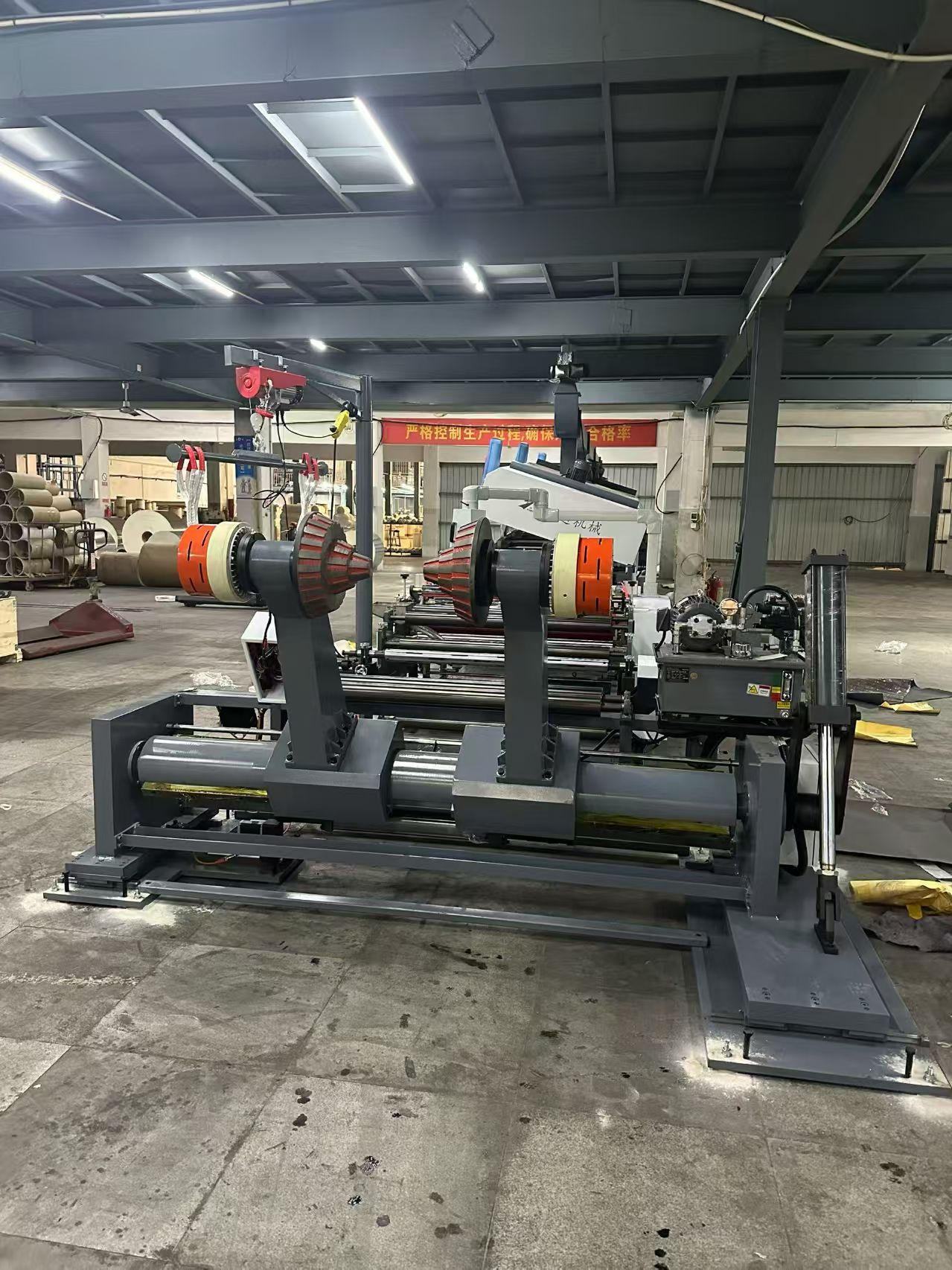
Body: Precision machining workshop producing core components for packaging machinery. Image source: YUEDA.
Comparison Table: ZNFH, YDLM1300B, and YD1300-1400
The table below compares published specifications only. It is not a ranking, and the machines have different roles in a metalized paper line. A buyer should compare them only after matching the substrate, roll plan, and downstream process.
| Equipment | Primary role | Published width | Published speed | Published specification focus | Downtime-relevant design note |
|---|---|---|---|---|---|
| ZNFH1300-1400-1500 | Automatic aluminum metallized cardboard laminating and coating with no-shaft rewinding | Sheet roll width 600–1200 mm, 700–1300 mm, 700–1400 mm; roller face 1300/1400/1500 mm | 5–150 m/min | Paper 40–450 g; foil 0.006–0.01 mm; film 0.01–0.1 mm; drying path 12.5 m; unwind and rewind diameter 100–1600 mm | No Shaft Type Rewinding targets manual shaft handling at the rewind station |
| YDLM1300B | Gantry-type multifunctional aluminum metallized cardboard laminating and coating machine | Working width 600–1200 mm | Machine speed 180 m/min; working speed 15–150 m/min | Paper 100–350 g/m²; PET film 0.012–0.014 mm; OPP film 0.02–0.06 mm; paper rewinding diameter 1600 mm; total weight 40T | Gantry architecture with multilayer heating and coating; review the roll-change procedure for the exact configuration |
| YD1300-1400 | Positioning Sheeter (Shaft-less) | Sheet roll width 700–1200 mm and 700–1300 mm | Running speed 95/90 m/min; mechanical sheeting speed 140 sheet/min | Sheeting accuracy ±0.1 mm; sheet length 400–1200 mm; stacking height 1300 mm; power 17.5 kW/20 kW | Shaft-less sheet roll handling supports a downstream shaft-less workflow |
Sources: YUEDA product specification data for ZNFH1300-1400-1500, YDLM1300B, and YD1300-1400. Table does not imply that the machines are interchangeable.
FAQ
What compliance and documentation checks should come before a shaft-less rewinding project?
Confirm the HS classification for the exact machine function. HS Code 8439.30.10 is cited for industrial paper laminating machines, but commercial classification references also show that laminating machinery can fall under different headings depending on function, so the final code should be confirmed with customs. Confirm the electrical configuration and voltage requirement; YUEDA lists customization for 110V/220V/380V and control systems. The provided specification set does not list CE, ISO, or destination-market conformity certificates for the ZNFH, so request model-specific certificates and declaration documents before shipment. For patent documents, YUEDA's published record includes utility model ZL 2022 2 1114210.X for an energy-saving double-layer drying oven on the YDLM1300B; request the model-specific patent list for the ZNFH rather than assuming the same patent applies.
What working width and speed does the ZNFH1300-1400-1500 support?
The ZNFH series lists sheet roll widths of 600–1200 mm, 700–1300 mm, and 700–1400 mm, with roller face widths of 1300 mm, 1400 mm, and 1500 mm. The running speed range is 5–150 m/min. The published substrate range is paper 40–450 g, aluminum foil 0.006–0.01 mm, and film 0.01–0.1 mm. The drying path is 12.5 m, and the unwind and rewind diameter range is 100–1600 mm.
What should be included in a budget request for a shaft-less metalized paper laminating line?
The published data in this article does not include a machine price. A useful budget request should specify the ZNFH model and roller face width, the required running speed within the 5–150 m/min range, the paper grade within 40–450 g, the foil or film thickness, the roll and core plan, the voltage and control system requirement, the drying and coating recipe, and whether a YD1300-1400 shaft-less sheeter is included. Ask for a quotation with the exact configuration, installation scope, spare-parts list, and warranty terms so the budget is based on the delivered line rather than a base model only.
Can we validate samples and machine performance before shipment?
Sample validation should be defined in writing with the actual substrate, roll size, target speed, coating weight, and drying conditions. YUEDA states 100% pre-shipment testing with a 2-hour continuous run, and third-party inspection is available. For a shaft-less laminating project, request the test record for rewind quality, tension stability, coating uniformity, and the roll-change procedure. If the project includes sheet cutting, include the YD1300-1400 sheeter in the same acceptance plan and check its ±0.1 mm sheeting accuracy against the required sheet length.
What is the lead time and minimum order for a ZNFH project?
YUEDA lists a minimum order of 1 unit. The stated lead time is 30–45 days for standard models and 45–60 days for customized models. After-sales support is listed as 24-hour online response, 48-hour domestic on-site service, and 72-hour overseas remote debugging. To move from evaluation to a quotation, send the substrate, roll size, target speed, plant conditions, and destination market to YUEDA through www.yuedamachine.com or request the catalog at the link below.
Conclusion
Shaft-less rewinding is a downtime-reduction strategy, not a standalone promise. The ZNFH1300-1400-1500 addresses the manual shaft-handling step in a metalized paper laminating and coating line, while its published 600–1400 mm width range, 5–150 m/min speed range, 12.5 m drying path, and 100–1600 mm roll diameter range define the project envelope. The YD1300-1400 shaft-less sheeter can extend the same handling logic to downstream sheet cutting.
For a buyer in the research to evaluation stage, the next step is to compare the machine against the actual roll plan, substrate, plant conditions, and acceptance protocol. A shaft-less line is most useful when the core quality, tension recipe, operator procedure, and service plan are specified together. That is the difference between a machine feature and a continuous production workflow.
Request a ZNFH configuration review
Send your substrate, roll size, target speed, and plant conditions to YUEDA. The company can respond with a configuration based on the ZNFH1300-1400-1500 series and, where relevant, the shaft-less YD1300-1400 sheeter.
Website: www.yuedamachine.com
Email: 2179069246@QQ.COM
Tel / WhatsApp: +86 19857780001
Catalog download: YUEDA packaging machinery brochure
Address: Yueda Machinery, Building 2, No. 1333 Times Avenue, Longgang City, Wenzhou City, Zhejiang Province, China.
CTA: YUEDA corporate reception area for customer visits, configuration reviews, and project negotiations. Image source: YUEDA.
Have Questions or Need More Details?
Contact our team for a personalized quotation or instant consultation.
Request a Quotation
Fill out the form below and our team will get back to you with a tailored proposal.
WhatsApp Direct Chat
Prefer to chat in real-time? Message us on WhatsApp for instant assistance & quick answers.
- Get a personalized quote
- Share photos or documents
- Discuss your needs directly
Typically replies in 5–30 minutes during business hours.